

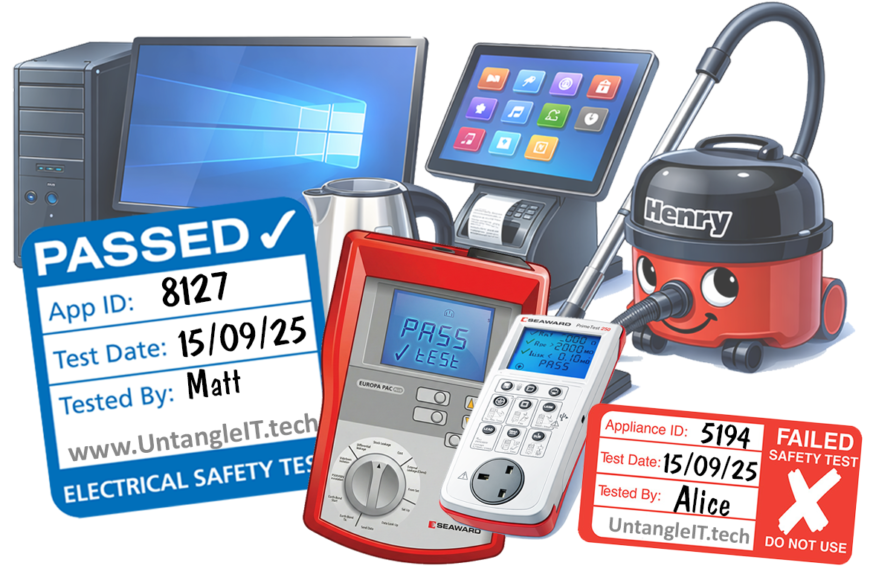
What is Electrical Equipment Testing?
Electrical Equipment Testing is the term used to describe the examination of electrical appliances and equipment to ensure they are safe to use. This should involve a visual examination and usually one or more further electronic tests, depending on the class of appliance.
How is that different to PAT Testing?
It isn’t! – The 5th Edition of the IET Code of Practice updated Portable Appliance Testing (PAT) to Electrical Equipment Testing (EET) to better reflect that inspections cover all, not just portable, plug-in items. This change removes ambiguity regarding stationary, IT, and fixed equipment, ensuring comprehensive safety coverage for commercial premises.
What is it not?
It is not the law that you must pay someone an exorbitant fee each year to place green stickers on every plug in your workplace! It was also never really PAT Testing – (that would be Portable Appliance Testing Testing. However, to avoid confusion we will use both terms interchangeably!).
That said, while annual EET testing is not a legal requirement, it may be a condition of your insurance policy. Many insurers expect evidence that electrical equipment is being checked at appropriate intervals, and EET testing is a widely recognised way of demonstrating this. Failing to meet those expectations could potentially affect a claim, which makes sensible, documented testing an important consideration for many businesses.
Why Electrical Equipment Testing matters?
Electrical faults are a significant cause of workplace fires, injuries, and equipment failure. Regular inspection and testing help to:
- Identify damaged or unsafe equipment before it becomes a hazard
- Reduce the risk of electric shock and fire
- Protect staff, customers, and visitors
- Provide evidence that you are taking reasonable steps to comply with health and safety law
- Support insurance requirements and risk assessments
- Extend the life of your electrical equipment
EET testing doesn’t have to be excessive or disruptive — but it does need to be done properly.
Competence Is Key
One of the biggest misconceptions is that EET testing is just about plugging an appliance into a machine and printing a label. In reality, competent testing involves:
- Understanding different classes of electrical equipment
- Carrying out meaningful visual inspections (where many faults are found)
- Interpreting test results correctly
- Knowing when an item should be removed from service
- Keeping clear, accurate records
Poor or “tick-box” EET testing can provide a false sense of security. That’s why it’s essential that testing is carried out by someone who knows what they’re doing and applies common sense, not just numbers.
Electrical Equipment Testing with UntangleIT.tech
At UntangleIT.tech, we provide practical, competent, and proportionate EET testing tailored to your business — not one-size-fits-all checklists.
- From just £50 per visit
- Testing carried out at a time that suits you and your business
- Minimal disruption to your staff and operations
- Clear, straightforward records and reporting
- Friendly, professional service with no scare tactics or overcharging (many charge per sticker, and include items that do not require or benefit from testing to inflate charges)
Whether your workspace is an office, a retail space, workshop, or salon, we make EET testing simple, affordable, and hassle-free.
Sensible Safety, Done Correctly
EET testing isn’t about box-ticking or unnecessary expense — it’s about sensible risk management and keeping people and property safe. When carried out correctly and competently, it’s a valuable part of a wider electrical safety strategy.
If you’d like to arrange EET testing or want honest advice about what’s appropriate for your setup — get in touch today.